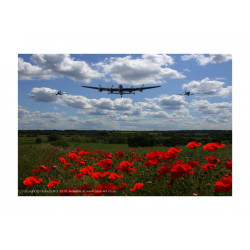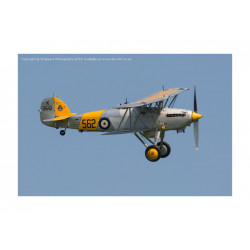


Photograph of Spitfire MH434 at Duxford airshow.
Available as Canvas, Fine Art and Welsh Slate Print.
 Security policy
Secure SSL Payments via Paypal
 Delivery policy
Free UK Delivery - 5 Working Days. See Terms and Conditions.
 Return policy
See our Terms and Conditions
The Supermarine Spitfire is probably the most famous aircraft of all time. It is a British Single-seat Fighter (although there were two seat trainer variants later) that saw extensive service for the Royal Air Force and its allies during the 2nd World War. It was produced in several different variants and was constantly updated to ensure that it was always one of the most able aircrafts on the front line in all theatres of war. Famously powered by the distinctive Rolls Royce Merlin (and later Griffin) engine, the spitfire is a true icon of British engineering.
During the 2nd world war the Spitfire proved its worth time and time again, seeing early success in the Battle of Britain and later adapting to bomber escort, photo reconnaissance and ground attack roles. It was the most numerous allied fighter, produced throughout the whole of war unlike any other aircraft. Today there are over 60 Spitfires still flying, but with several restorations taking place this number is ever growing. The sight of the iconic elliptical wings and the sound the Rolls Royce Merlin Engine overhead still stirs emotions and feelings of admiration for those who flew and maintained them during our darkest hours.
MH434 is probably the most famous and best loved of all Spitfires still flying, it was built in 1943 at Vickers, Castle Bromwich and was first flown by famous test pilot Alex Henshaw. It went on to perform admirably during the war. Since 1970, it has participated across Europe as a key performer in the most famous air shows. It has also appeared in numerous television productions and films including the 1968 Battle of Britain movie. MH434 is based at the historic airfield, Duxford where it is maintained and operated with great pride by the Old Flying Machine Company (OFMC).
Data sheet
Photograph of Spitfire MH434 at Duxford airshow.
Available as Canvas, Fine Art and Welsh Slate Print.